
Introduction
For many international students, studying in Italy is not just an academic choice. It is often part of a bigger life plan: moving abroad, adapting to a different system, learning a new language, and building a future in one of Europe’s most distinctive countries.
Italy continues to attract growing interest from students worldwide. At the same time, the admission process can feel confusing at first because it is not based on one centralized application system.
In most cases, students need to understand two layers at once: the university’s own admission process and the national administrative procedures linked to international enrolment. One of the most important reference points is Universitaly, the official portal for higher education orientation and pre-enrolment.
In this guide, you will learn:
- What qualifications are required for Bachelor’s, Master’s, and PhD entry
- Which documents are usually needed
- What changes between EU and non-EU students
- How Universitaly works
- When a student visa is required
- Whether Italian is necessary or English is enough
- Which mistakes most often cause delays or rejection
The goal is simple: to help you understand the rules and move through them with more clarity and fewer surprises.
Before focusing on admission, it also helps to understand how degrees, cycles, and institutions are structured. For that, see our guide to the Italian university system.
How to Apply to Italian Universities as a Foreign Student
Students from any country can apply to an Italian university. The Italian higher education system is structured in cycles:
- Bachelor’s degree (Laurea): usually requires a final secondary school qualification after at least 12 years of schooling
- Master’s degree (Laurea Magistrale): requires a recognized Bachelor’s degree or equivalent
- PhD: requires a recognized second-cycle degree or equivalent
However, having a diploma or degree is not always enough on its own. Universities may need to assess whether your previous qualification is considered equivalent to the Italian one in terms of level, duration, and content. That is why documents such as a Declaration of Value (DoV) or CIMEA certification may become important later in the process.
One of the most common misunderstandings is assuming that Italy works like countries where one platform manages everything from application to final enrolment. Actually, the process usually works on two levels:
- University level – you choose a program, submit your academic application, and receive an admission decision
- Administrative level – you complete pre-enrolment, recognition, and visa-related steps when required
This matters because academic admission does not always mean the process is finished. For many non-EU students, being accepted by a university must be followed by Universitaly pre-enrolment, consular checks, and a student visa application.
A useful mindset is this: treat the process as a sequence, not a single form.
Entry Requirements and Document Checklist

At the most basic level, international students usually need:
- a qualification that matches the level of study they want to enter
- the full set of required documents
- formal admission from the university
However, the real level of difficulty depends a lot on the course.
Some programs have open access, which means that students mainly need to meet the academic criteria and complete the application correctly. Others have limited access and may involve additional evaluation, entrance tests, or a fixed number of places.
This is especially relevant for programs such as medicine, dentistry, veterinary medicine, and, in some cases, architecture. These courses can follow stricter national procedures and competitive rankings.
Basic Requirements by Degree Level
The exact document list varies by institution, but most international applicants are asked to prepare the following:
| Document | Why It Matters | Common Notes |
|---|---|---|
| Final diploma/degree certificate | Prove your previous qualification | May need translation or validation |
| Transcript of records | Shows subjects, credits, and grades | Especially important for Master’s admissions |
| Passport | Confirms identity and nationality | Must usually be valid for the relevant period |
| Motivation letter/statement of purpose | Helps explain your academic goals | Not always mandatory, but often requested |
| CV / résumé | Shows academic or professional background | More common for Master’s and PhD |
| Language certificate | Shows English or Italian proficiency | Depends on the program language and university rules |
Depending on your country and your university, you may also need recognition-related documents such as a Declaration of Value or CIMEA certification.
This is one of the most important stages of the process. Many students are academically eligible, but still face delays because their file is incomplete, translated incorrectly, or missing formal validation.
Declaration of Value, CIMEA, and Why They Matter
Many international students first encounter the terms Declaration of Value and CIMEA only after they have already started applying. By that point, the process can feel surprisingly formal.
The purpose of these documents is not to make the process harder. It is to allow Italian institutions to understand and validate the educational value of a qualification issued abroad.
Very simply:
- Declaration of Value (DoV) is usually issued by the Italian diplomatic representation in the country where the qualification was obtained
- CIMEA certification is an alternative route used in many cases to verify comparability and level
Not every university will require the same route in the same way, which is why one of the most practical things you can do is verify the requirements with the institution you are applying to.
This is also why starting late creates problems. Recognition documents are often not things you can obtain in a few hours. They may require translations, legalizations, consular appointments, and waiting periods.
For many students, this is the point where the admission process becomes “real.” Up to that moment, it may seem like a standard university application. After that, it becomes clear that studying in Italy also means learning how to move through a formal international recognition process.
How the Application Process Works
Although details vary by institution, the process usually follows a recognizable sequence.
The official platform for the international administrative side of the process is Universitaly, which offers a dedicated “First Steps in Italy” section and a pre-enrolment area for international students, and it is explicitly connected to study visa procedures.
Non-EU students, generally, need to complete:
- academic admission from the university
- pre-enrolment via Universitaly
- student visa application through the Italian consulate
- residence permit procedures after arrival
The academic part may look similar, but the legal and administrative path is often more demanding for non-EU students. That makes timing especially important.
Step-by-Step Guide
| Step | What You Do | Why It Matters |
|---|---|---|
| 1 | Choose the university and program | Requirements differ by institution and course |
| 2 | Prepare academic and identity documents | Incomplete files create delays |
| 3 | Apply to the university | This is the academic admission phase |
| 4 | Receive admission or conditional acceptance | Needed for next steps |
| 5 | Complete pre-enrolment on Universitaly | Essential for many non-EU applicants |
| 6 | Apply for a student visa | Required before travel for non-EU students |
| 7 | Arrive in Italy and finalize enrolment | The process is not fully finished until this stage |
Deadlines and Timing
One of the most common mistakes international students make is underestimating timing.
Even when the university application itself seems manageable, the full process can take much longer because it may include:
- document preparation
- translation or legalization
- academic evaluation by the university
- Universitaly pre-enrolment
- consular appointments
- visa processing
For this reason, non-EU students should ideally begin planning 6 to 9 months in advance. In many cases, the biggest risk is not rejection, but running out of time despite being academically eligible.
Student Visa Requirements for Non-EU Students
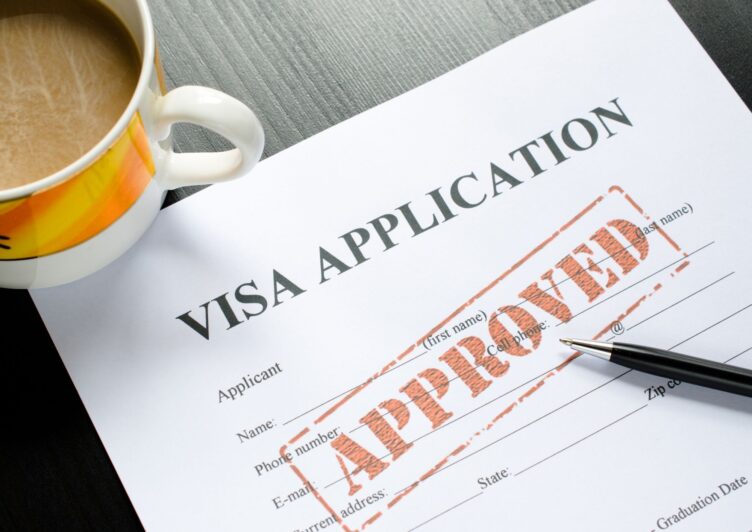
For most non-EU students, admission alone is not enough. You also need a study visa before entering Italy.
Although requirements can vary slightly by consulate, students are often asked to show:
- proof of admission or pre-enrolment
- evidence of sufficient financial means
- proof of accommodation
- health insurance or health coverage
- a valid passport
This stage is handled through Italian diplomatic authorities, not by the university alone. That is why students should treat the visa as a separate step with its own timeline and documentation. We recommend that you check the specific requirements directly with the Italian Embassy or Consulate General responsible for your place of residence, as procedures and document requests may vary slightly depending on the country.
For a more practical overview, see our Italian student visa guide.
Before You Apply: What to Check and What to Avoid
Entry requirements are not only about legal eligibility. They are also about choosing a path that is realistic and sustainable.
Before applying, it helps to ask:
- Is the program taught in a language I can genuinely follow?
- Is admission open or competitive?
- Does the university have a clear and reliable international office?
- Does the city match my budget and lifestyle?
- How complex is the document recognition process likely to be in my case?
These questions matter because an application is successful not only when it is accepted, but when it leads to a path that is actually workable.
At the same time, many common issues in the admission process are not related to eligibility, but to timing and misunderstandings. Students often encounter difficulties when they:
- start too late
- assume admission and visa procedures are the same
- ignore DoV or CIMEA requirements
- underestimate the importance of the Italian language
- apply without checking whether the program is open or has limited access
- rely on incomplete or unofficial information instead of official university sources
Most of these issues are preventable. The process becomes much more manageable when it is approached as a structured pathway with several connected stages.
Prepare for an Italian University with Europass
Learning Italian is essential for navigating daily life and communicating effectively.
Preparing in advance can therefore make a significant difference in how smoothly you transition into university life in Italy, which is why having structured support before you start can be particularly valuable.
If you want to prepare before starting your university journey in Italy, our University Pathway Programmes provide a structured path that combines Italian language learning with guidance through the application process, including support with administrative procedures.
FAQ
What qualifications do I need to study in Italy?
You usually need a qualification equivalent to the Italian level you are applying for: a secondary school diploma for Bachelor’s degrees, a Bachelor’s degree for Master’s degrees, and a Master’s degree for PhD programs.
Do international students need Universitaly?
For most non-EU students, yes. Universitaly is the official platform used for pre-enrolment and is closely connected to the visa process.
Do I need a student visa to study in Italy?
If you are a non-EU student, in most cases, yes. You usually need academic admission first, then pre-enrolment, and then the visa process through the Italian consulate.
Can I study in Italy in English?
Yes, especially at the master’s level. Universitaly notes that several graduate programs are taught in English, while most undergraduate programs are still in Italian.
Do I need Italian even if my degree is in English?
Not always as a formal requirement, but in most cases, Italian is a major advantage for daily life, administration, housing, and integration.
What is the most common mistake students make?
Starting too late is one of the most common problems. Many students underestimate how long document preparation, recognition, pre-enrolment, and visa procedures can take.