
Italy is not equally expensive across the country; this is one of the reasons why Italy can suit a wide range of retirement budgets.
For many foreign retirees, the overall cost of living in Italy can compare favorably with countries such as the United States, especially when it comes to healthcare and everyday expenses. In this sense, Italy frequently stands out not only for its appealing lifestyle but also for the potential of a more manageable retirement budget.
Housing Costs in Italy for Retirees
Housing costs in Italy are shaped first of all by regional differences. The table below provides an overview of average sale and rental prices per square meter across the country, showing how significantly costs can vary from one region to another.
Italy Housing Prices by Region (€/m²)
| Region | Sale (€/m²) | Rent (€/m²) |
|---|---|---|
| Abruzzo | 1,381 | 8.14 |
| Basilicata | 1,308 | 7.32 |
| Calabria | 960 | 8.46 |
| Campania | 1,959 | 10.75 |
| Emilia Romagna | 2,146 | 13.26 |
| Friuli Venezia Giulia | 1,776 | 10.49 |
| Lazio | 2,592 | 15.73 |
| Liguria | 2,722 | 11.33 |
| Lombardy | 2,729 | 18.49 |
| Marche | 1,610 | 9.1 |
| Molise | 1,043 | 7.07 |
| Piedmont | 1,425 | 10.09 |
| Puglia | 1,438 | 9.13 |
| Sardinia | 2,463 | 12.88 |
| Sicily | 1,168 | 8.28 |
| Tuscany | 2,640 | 16.21 |
| Trentino Alto Adige | 3,704 | 13.4 |
| Umbria | 1,178 | 8.45 |
| Aosta Valley | 2,722 | 21.88 |
| Veneto | 2,184 | 12.19 |
Source: Immobiliare.it (data consulted: March 2026)
At a more local level, location also plays an important role. Housing tends to be more expensive in larger cities, where demand is higher, and prices can vary significantly from one neighborhood to another. By contrast, smaller towns and villages often offer more affordable options, which can be especially appealing for retirees looking for lower living costs.
Beyond rent, it is also important to consider utilities such as electricity, heating, water, and internet. For a standard apartment, basic utilities cost on average around €200 per month, although they can vary depending on the size of the property, energy use, and the season.
In practice, many retirees find that choosing a smaller community rather than a major city allows them to reduce housing costs while enjoying a quieter and more authentic Italian lifestyle.
Food and Grocery Costs in Italy
One of the pleasures of living in Italy is the quality of everyday food. Fresh produce, local markets, and a strong food culture make it easy to enjoy meals that are both affordable and satisfying.
From a practical point of view, grocery costs in Italy are generally manageable, with price data for everyday items remaining relatively moderate compared to many other Western countries.
As a general estimate, a single retiree may spend around €200 – €300 per month on groceries, while a retired couple may spend approximately €350 – €500 per month, depending on lifestyle and location.
Healthcare Costs for Retirees in Italy
Access to healthcare is often one of the key concerns for anyone planning to retire abroad, and in this respect, Italy is frequently seen as a reassuring choice.
The country’s public healthcare system, the Servizio Sanitario Nazionale (SSN), provides access to medical services for those who are entitled to register. However, access depends on nationality and residence status:
- According to the Italian Ministry of Health, EU citizens may use the EHIC for short stays and can register with the SSN once they become residents.
- Non-EU citizens may, in some cases, apply for voluntary registration with the SSN through the payment of an annual contribution, which is typically calculated based on income rather than set at a fixed amount. As of 2025, voluntary registration with the SSN remains income-based, with a minimum annual contribution of €2,000.
In addition, some retirees choose to rely on private health insurance, especially during the initial phase of relocation. Households purchasing private health insurance directly spend an average of €919 per year, although actual premiums vary depending on age, health profile, and level of cover.
Overall, healthcare in Italy is often considered one of the country’s main advantages, but it remains an aspect that should be carefully planned before making the move.
Transportation and Everyday Expenses
Everyday life in Italy can be surprisingly manageable for retirees, especially outside the largest cities.
| City | Rent (One-bedroom, city centre) | Monthly transport pass | Utilities | Meal | Total |
|---|---|---|---|---|---|
| Rome | €1,166.15 | €35.00 | €185.29 | €15.00 | €1,401.44 |
| Milan | €1,472.00 | €39.00 | €221.51 | €20.00 | €1,752.51 |
| Turin | €726.47 | €38.00 | €201.38 | €15.00 | €980.85 |
| Florence | €1,115.00 | €38.70 | €180.27 | €20.00 | €1,353.97 |
| Bologna | €921.24 | €39.00 | €204.63 | €20.00 | €1,184.87 |
| Naples | €1,000.00 | €42.00 | €194.98 | €15.00 | €1,251.98 |
Daily expenses are not limited to rent, groceries, and healthcare: transportation, phone bills, internet, and leisure activities also play an important role in shaping the overall cost of living. Public transport is generally affordable, with monthly passes often costing around €35 – €50, depending on the city.
Other regular expenses may include phone and internet services, social activities, and local services, all of which can vary according to lifestyle.
Cost of Living Differences Across Italy
One of the most important things to understand when planning retirement in Italy is that the cost of living can change significantly from one part of the country to another.
Choosing the right location is often just as important as setting the right budget:
- In general, Northern Italy tends to have a higher cost of living, but it also offers stronger infrastructure, more services, and larger international communities.
- Central Italy often represents a middle ground, combining lifestyle appeal with moderate costs.
- Southern Italy, by contrast, is usually the most affordable option, particularly for retirees who are open to smaller towns and a quieter pace of life.
For many foreign retirees, this regional variety is one of Italy’s greatest advantages. It allows people to choose a destination that reflects both their financial priorities and the type of lifestyle they want to enjoy.
Best Regions to Retire in Italy
For retirees looking to make their budget go further, some parts of Italy stand out as particularly attractive. Regions such as Puglia, Sicily, and Abruzzo are often considered among the most affordable places to retire, thanks to their lower housing costs, slower pace of life, and strong sense of local community.
In many cases, smaller communities offer the best balance between affordability and quality of life, allowing retirees to enjoy lower monthly expenses while experiencing a more authentic side of Italy.
Beyond the financial aspect, these regions also offer something many retirees are looking for, a closer connection to local culture. For those who imagine retirement in Italy as both a practical and lifestyle choice, affordable regions in the south and in smaller inland areas often deserve special consideration.
| Region | Why do people choose it | Average rent (1-bedroom) | Notes |
|---|---|---|---|
| Sicily | Very affordable, warm climate, relaxed lifestyle | €300–€600 | Among the cheapest regions in Italy |
| Puglia | Coastal lifestyle, good value for money | €400–€700 | Popular with expats in the south |
| Tuscany | High quality of life, culture, and services | €700–€1,200 | More expensive in cities like Florence |
| Abruzzo | Low cost, nature, quieter lifestyle | €300–€600 | Growing interest from foreigners |
| Umbria | Peaceful, central location, authentic lifestyle | €500–€800 | Similar to Tuscany but more affordable |
| Sardinia | Beautiful coastline, slower pace of life | €500–€900 | Prices vary between inland and coast |
Source: Idealista, Numbeo, and International Living (data consulted: 2025).
Tax Benefits for Foreign Retirees
Italy’s 7% tax regime is a special scheme designed for eligible foreign pensioners who relocate to certain municipalities in Italy. Under this regime, they can pay a flat substitute tax of 7% on all foreign-source income, instead of being subject to Italy’s ordinary progressive income tax rates. The scheme is optional, can be applied for up to 10 years, and must be elected through the annual Italian tax return.
Starting Your Retirement in Italy
Smaller towns, especially in Southern Italy, can be very appealing for their affordability and slower pace of life.
At the same time, for retirees who do not yet speak Italian, settling in a smaller community could be more complicated, especially when it comes to practical matters related to administrative procedures and healthcare.
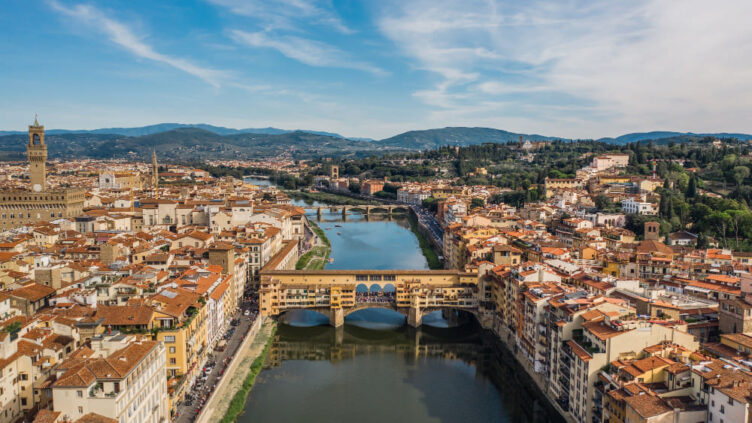
For this reason, some people find it helpful to spend time in a larger and better-connected city where daily life may feel easier to navigate while learning the language before taking a final decision. Florence can be a particularly good starting point, thanks to its manageable size, wide range of services, and walkable urban setting.
And learning Italian with us can also make the transition smoother, helping future retirees build confidence with the language and become more familiar with everyday life in Italy before choosing a smaller or more remote destination.